
Diamond Shape
What is Diamond Shape?
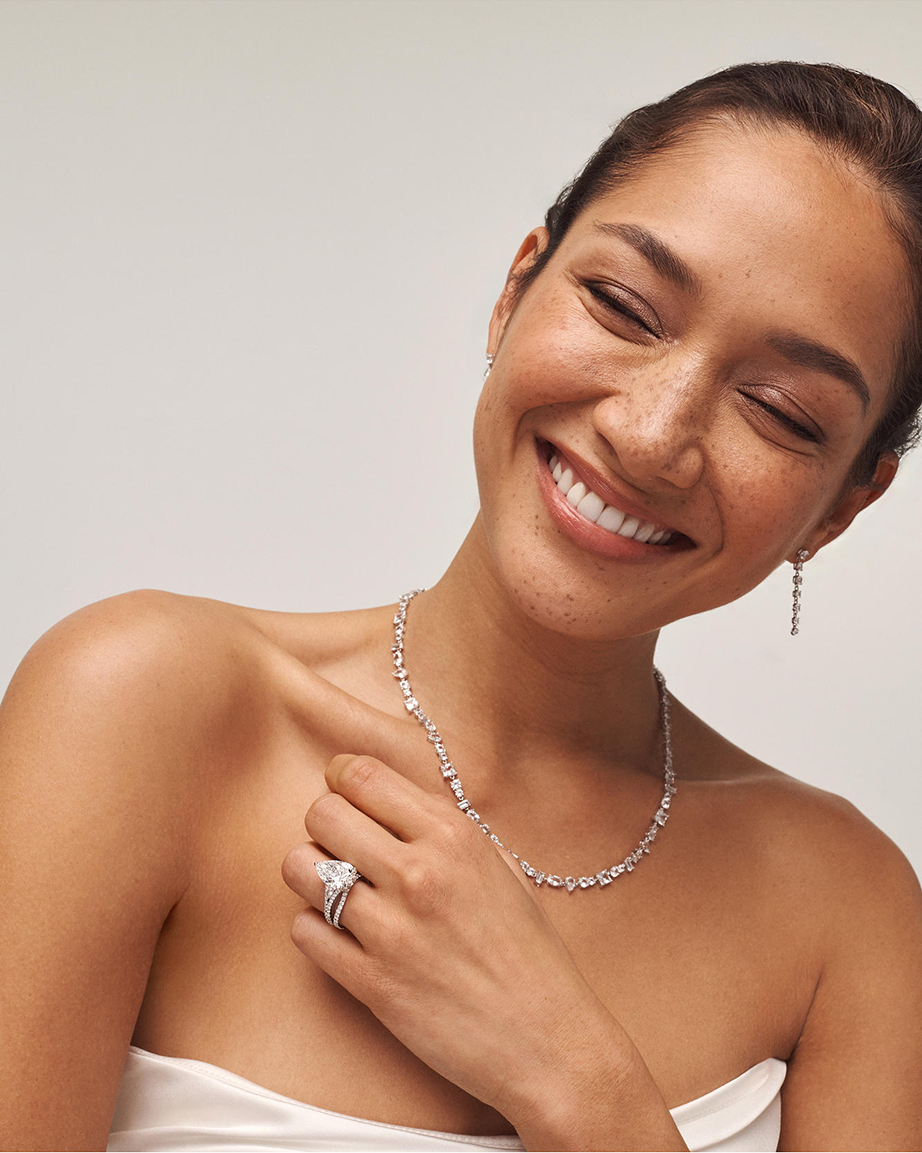
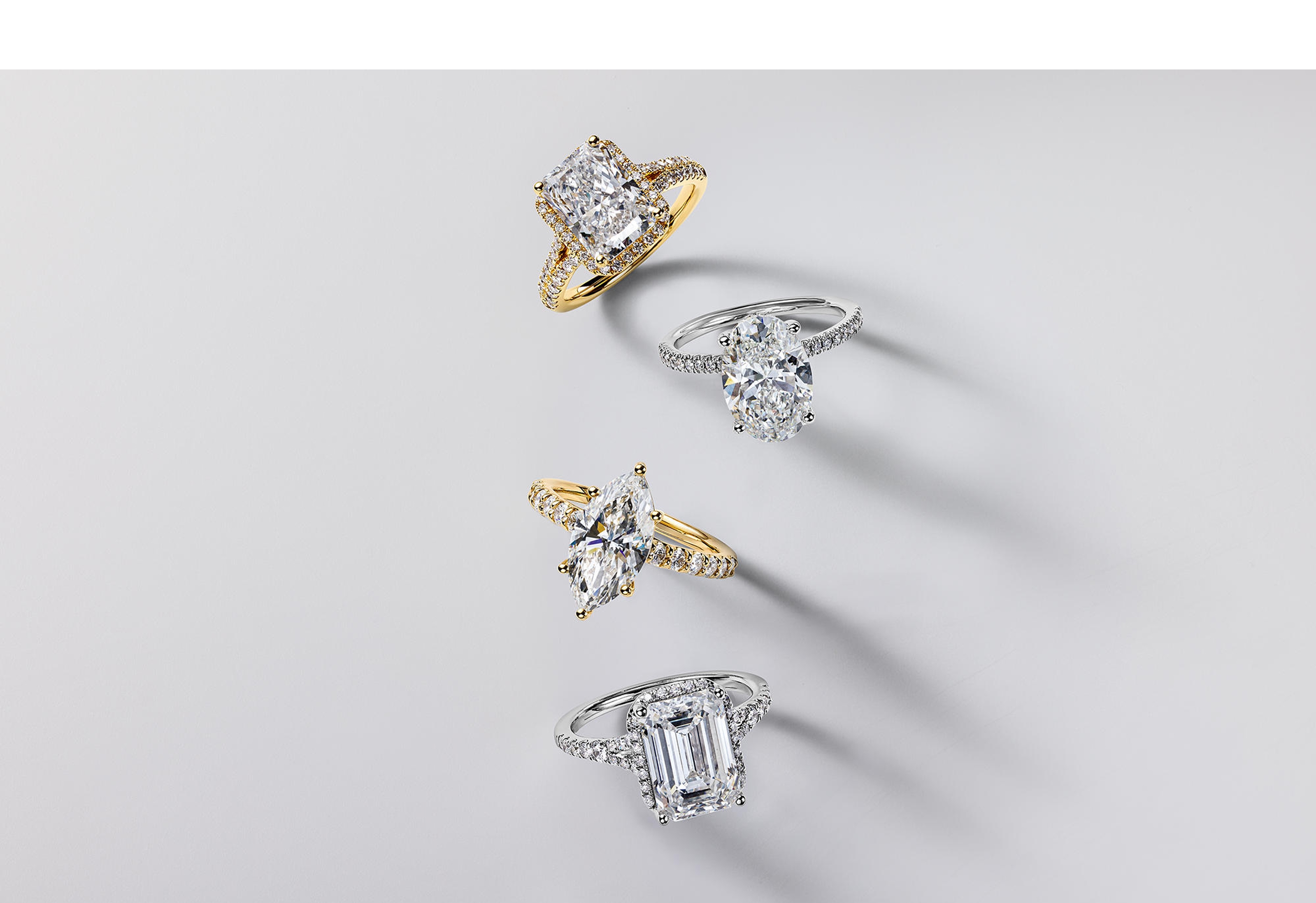
Diamond shapes are more than just a design choice—they’re a reflection of your personal style. Popular diamond shapes like round, oval, princess, emerald, and pear each have their own unique characteristics, creating different levels of brilliance, dimension, and visual impact.
From the timeless sparkle of a round-cut diamond to the elongated elegance of an oval-cut diamond, every shape offers a distinct look and feel. Whether you’re drawn to classic, modern, or vintage-inspired designs, understanding diamond shapes can help you find the perfect stone for your engagement ring. Explore how different diamond cuts influence a ring’s appearance, from the way it reflects light to how large it appears on the finger.
Explore how different diamond cuts influence a ring’s appearance, from the way they reflect light and enhance brilliance to how large the diamond appears on the finger. Factors like proportion, symmetry, and setting style can also play a role in how each diamond shape comes to life.
When choosing an engagement ring, consider how the diamond shape complements your lifestyle, setting, and overall aesthetic. Whether you prefer a classic round-cut diamond, a romantic pear-shaped design, or a unique heart-shaped diamond engagement ring, finding the right diamond cut is the first step toward creating a ring you’ll love forever.
Round Diamonds
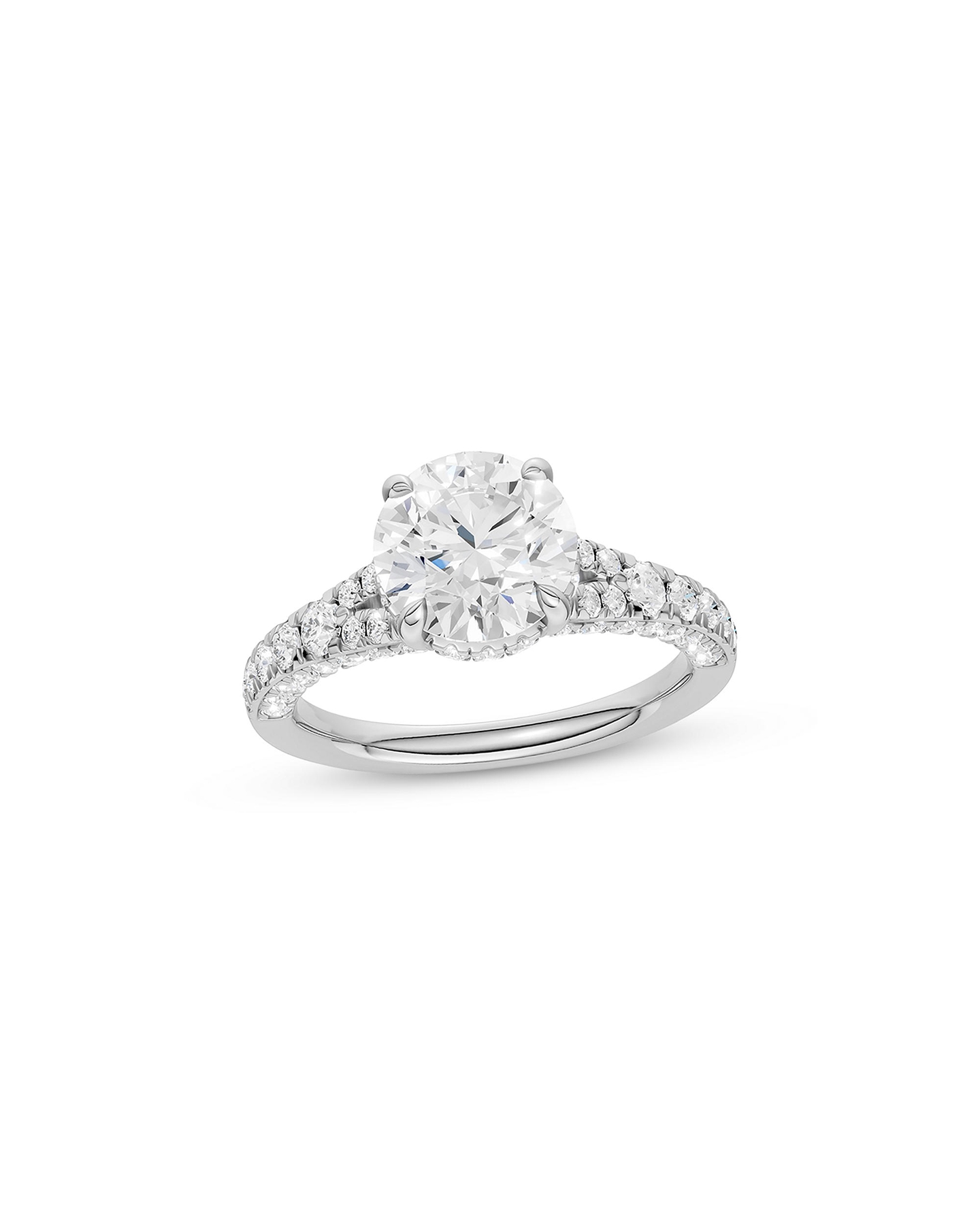
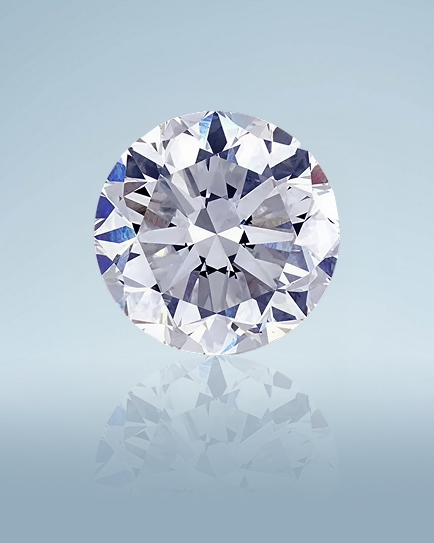
The round-cut diamond, the most popular of all diamond shapes, is celebrated for its timeless beauty and exceptional sparkle, making it a classic engagement ring choice.
The round-cut diamond is easily recognized by its round shape from above and its cone shape from the side. The symmetry and proportions of the round-cut diamond emphasize the stone’s remarkable fire and sparkle. Round-cut diamonds typically have 58 facets that reflect light easily, offering exceptional brilliance.
Its traditional circular shape and brilliant shine offer a softer, more classically romantic feel in contrast to the more modern, geometric shape of a princess-cut diamond.
Due to their high demand, round-cut diamonds tend to be priced higher than other diamond shapes. Round-cut diamonds also require a larger amount of raw material when cut from a rough diamond, only retaining about 40% of the rough diamond, whereas a princess-cut diamond will retain about 80%. However, the incredible brilliance of a round-cut diamond hides inclusions well, so you can opt for a lower clarity grade.
The round-cut diamond is easily recognized by its round shape from above and its cone shape from the side. The symmetry and proportions of the round-cut diamond emphasize the stone’s remarkable fire and sparkle. Round-cut diamonds typically have 58 facets that reflect light easily, offering exceptional brilliance.
Its traditional circular shape and brilliant shine offer a softer, more classically romantic feel in contrast to the more modern, geometric shape of a princess-cut diamond.
Due to their high demand, round-cut diamonds tend to be priced higher than other diamond shapes. Round-cut diamonds also require a larger amount of raw material when cut from a rough diamond, only retaining about 40% of the rough diamond, whereas a princess-cut diamond will retain about 80%. However, the incredible brilliance of a round-cut diamond hides inclusions well, so you can opt for a lower clarity grade.
Oval Diamonds
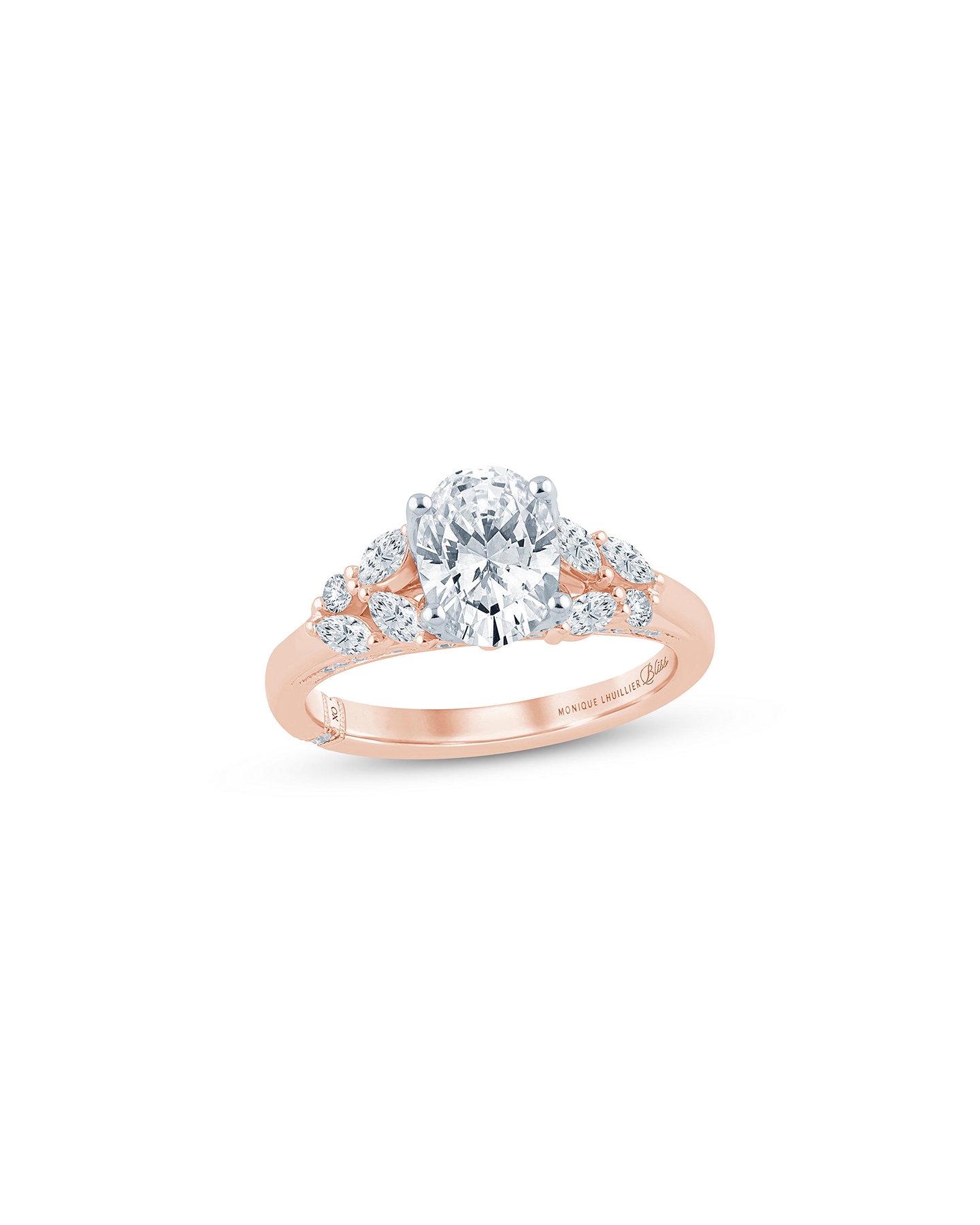
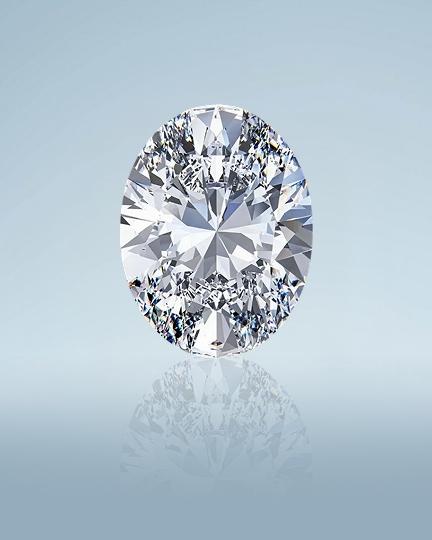
The oval-cut diamond is admired for its elongated round shape. Learn more about what makes the oval-shaped diamond an attractive choice for an engagement ring.
Oval-cut diamonds come in different proportions. The most popular and appealing length-to-width ratio for an oval-cut diamond is between 1.30-1.50. Outside these ranges, the diamond may start to look too boxy or too long. Oval-cut diamonds are typically comprised of 58 facets, offering a high level of brilliance and fire. Depending on your personal taste, you may be drawn to a thinner oval, while others may prefer a rounder outline.
With its soft, rounded outline, the oval-cut diamond evokes a classic sophistication. At the same time, its elongated shape creates the illusion of appearing slightly larger than a round-cut diamond of the same carat weight, giving it a bolder look. An oval-cut diamond can also make your fingers appear longer and slimmer.
The oval-cut diamond is generally less expensive than a round-cut diamond of similar size and quality, due in part to the fact that the oval shape doesn’t require as much material to be removed from the rough diamond during the cutting process. This means you can often get better value for your money from an oval-cut diamond of the same carat weight.
Oval-cut diamonds come in different proportions. The most popular and appealing length-to-width ratio for an oval-cut diamond is between 1.30-1.50. Outside these ranges, the diamond may start to look too boxy or too long. Oval-cut diamonds are typically comprised of 58 facets, offering a high level of brilliance and fire. Depending on your personal taste, you may be drawn to a thinner oval, while others may prefer a rounder outline.
With its soft, rounded outline, the oval-cut diamond evokes a classic sophistication. At the same time, its elongated shape creates the illusion of appearing slightly larger than a round-cut diamond of the same carat weight, giving it a bolder look. An oval-cut diamond can also make your fingers appear longer and slimmer.
The oval-cut diamond is generally less expensive than a round-cut diamond of similar size and quality, due in part to the fact that the oval shape doesn’t require as much material to be removed from the rough diamond during the cutting process. This means you can often get better value for your money from an oval-cut diamond of the same carat weight.
Cushion-Cut Diamonds
Incredibly popular in the 19th and early 20th centuries, the cushion-cut diamond has been brought back into the spotlight after many top celebrities were spotted wearing cushion-cut diamond engagement rings.
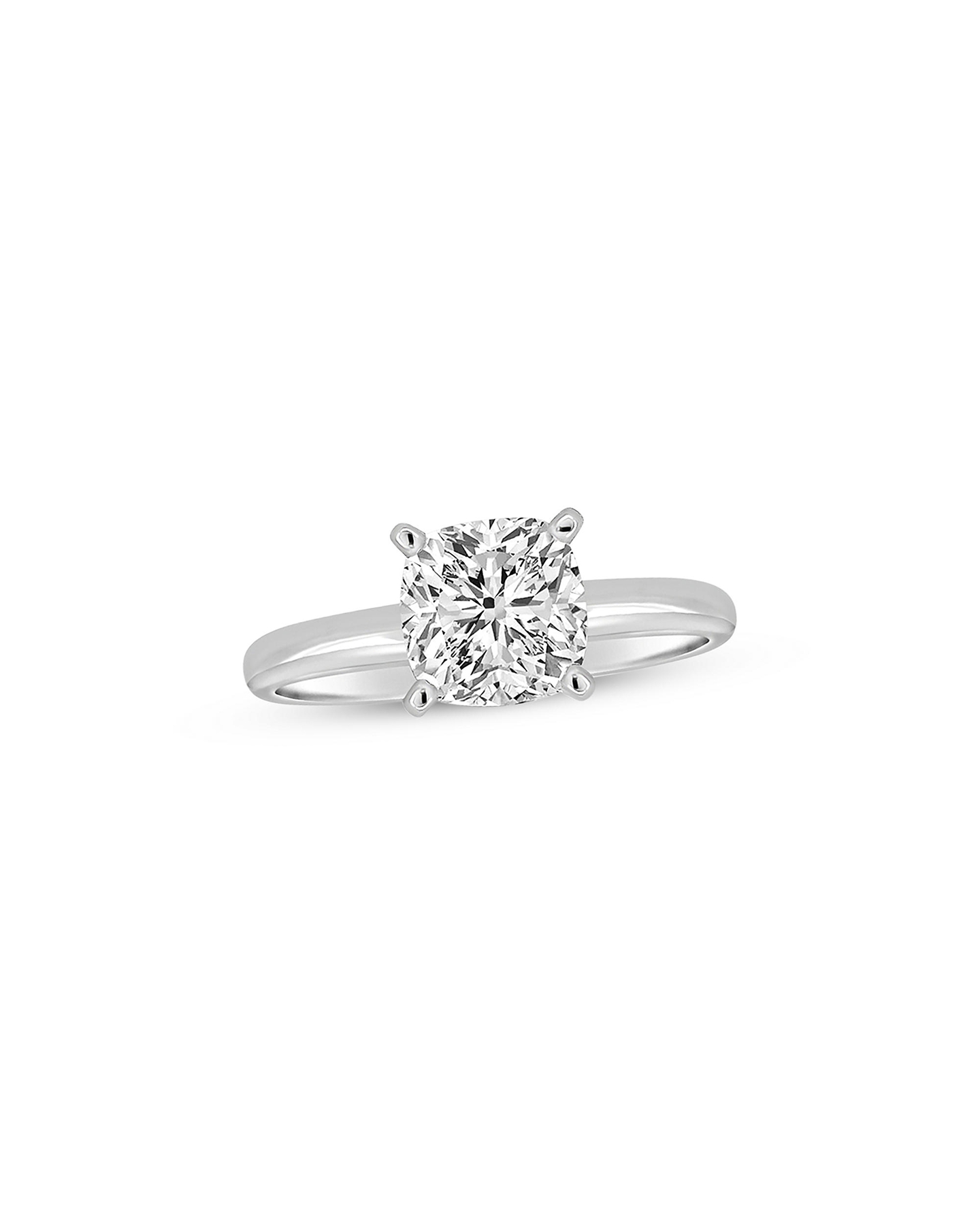
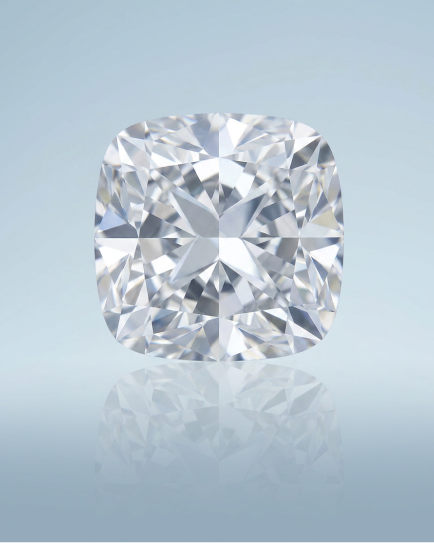
Also referred to as a pillow-cut diamond, the cushion-cut diamond gets its name from its soft, pillow-like shape. When viewed from above, the cushion-cut diamond has a square or rectangular shape with rounded corners. Cushion-cut diamonds are typically comprised of 58 or 64 large facets, offering a high level of brilliance and fire.
The cushion-cut diamond is widely admired for its vintage glamour and remarkable fire. With its distinct shape, the cushion-cut diamond offers elegant, romantic appeal.
Although it’s becoming an increasingly popular engagement ring option, the cushion-cut diamond is generally less expensive than a round-cut diamond. Cushion-cut diamonds also hide inclusions well, so you might consider opting for a lower clarity grade if you’re on a budget.
Also referred to as a pillow-cut diamond, the cushion-cut diamond gets its name from its soft, pillow-like shape. When viewed from above, the cushion-cut diamond has a square or rectangular shape with rounded corners. Cushion-cut diamonds are typically comprised of 58 or 64 large facets, offering a high level of brilliance and fire.
The cushion-cut diamond is widely admired for its vintage glamour and remarkable fire. With its distinct shape, the cushion-cut diamond offers elegant, romantic appeal.
Although it’s becoming an increasingly popular engagement ring option, the cushion-cut diamond is generally less expensive than a round-cut diamond. Cushion-cut diamonds also hide inclusions well, so you might consider opting for a lower clarity grade if you’re on a budget.
Princess-Cut Diamonds
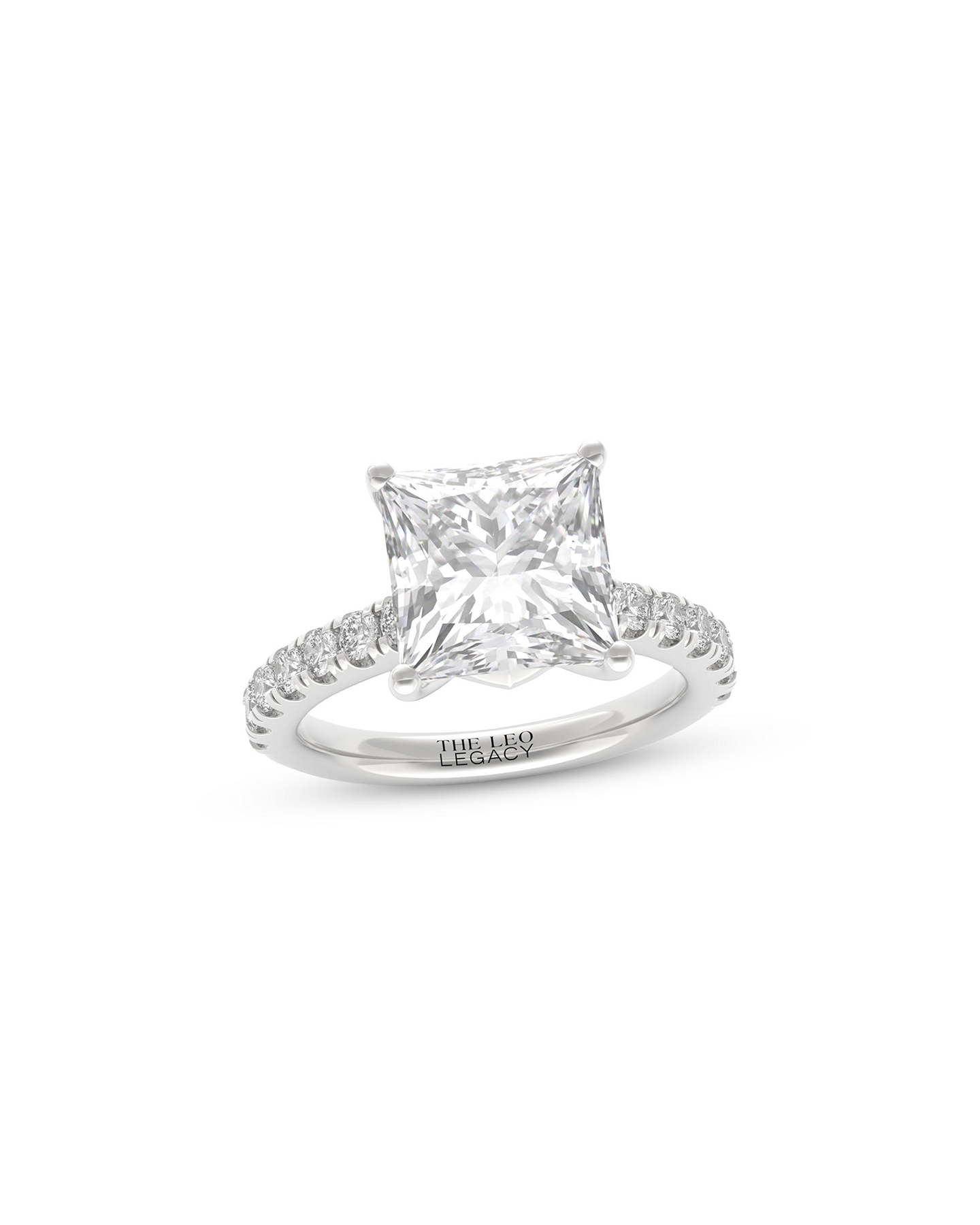
Developed in the 1970s, the princess-cut diamond is a relatively new diamond shape and has quickly become a classic engagement ring choice. Today, it’s the second-most popular diamond shape, next to round-cut diamonds.
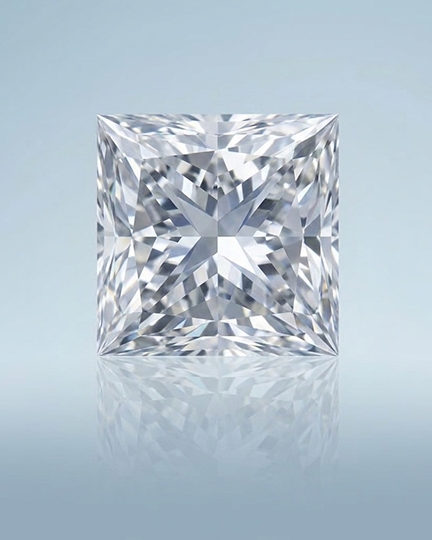
From above, princess-cut diamonds have a square or slightly rectangular shape with pointed corners. From the side, it resembles an inverted pyramid. A princess-cut diamond is typically made up of either 57 or 76 facets, a design that maximizes sparkle.
Compared to the soft, rounded edges of a cushion-cut diamond, the crisp lines of a princess-cut diamond offer a more contemporary, geometrical look. Its proportions can also make princess-cut diamonds appear larger than a round-cut diamond of the exact same carat size. This is because the top (table) of a princess-cut diamond is larger and the bottom (pavilion) is smaller, giving it a larger diameter when measured from corner to corner.
Princess-cut diamonds are also an excellent value as they retain about 80% of the rough diamond during the cutting process, whereas round-cut diamonds only retain about 40%. Since less material is lost, princess-cut diamonds are typically more affordable than round-cut diamonds of the same carat weight, making them a popular choice for those seeking both beauty and value.
From above, princess-cut diamonds have a square or slightly rectangular shape with pointed corners. From the side, it resembles an inverted pyramid. A princess-cut diamond is typically made up of either 57 or 76 facets, a design that maximizes sparkle.
Compared to the soft, rounded edges of a cushion-cut diamond, the crisp lines of a princess-cut diamond offer a more contemporary, geometrical look. Its proportions can also make princess-cut diamonds appear larger than a round-cut diamond of the exact same carat size. This is because the top (table) of a princess-cut diamond is larger and the bottom (pavilion) is smaller, giving it a larger diameter when measured from corner to corner.
Princess-cut diamonds are also an excellent value as they retain about 80% of the rough diamond during the cutting process, whereas round-cut diamonds only retain about 40%. Since less material is lost, princess-cut diamonds are typically more affordable than round-cut diamonds of the same carat weight, making them a popular choice for those seeking both beauty and value.
Heart-Shaped Diamonds
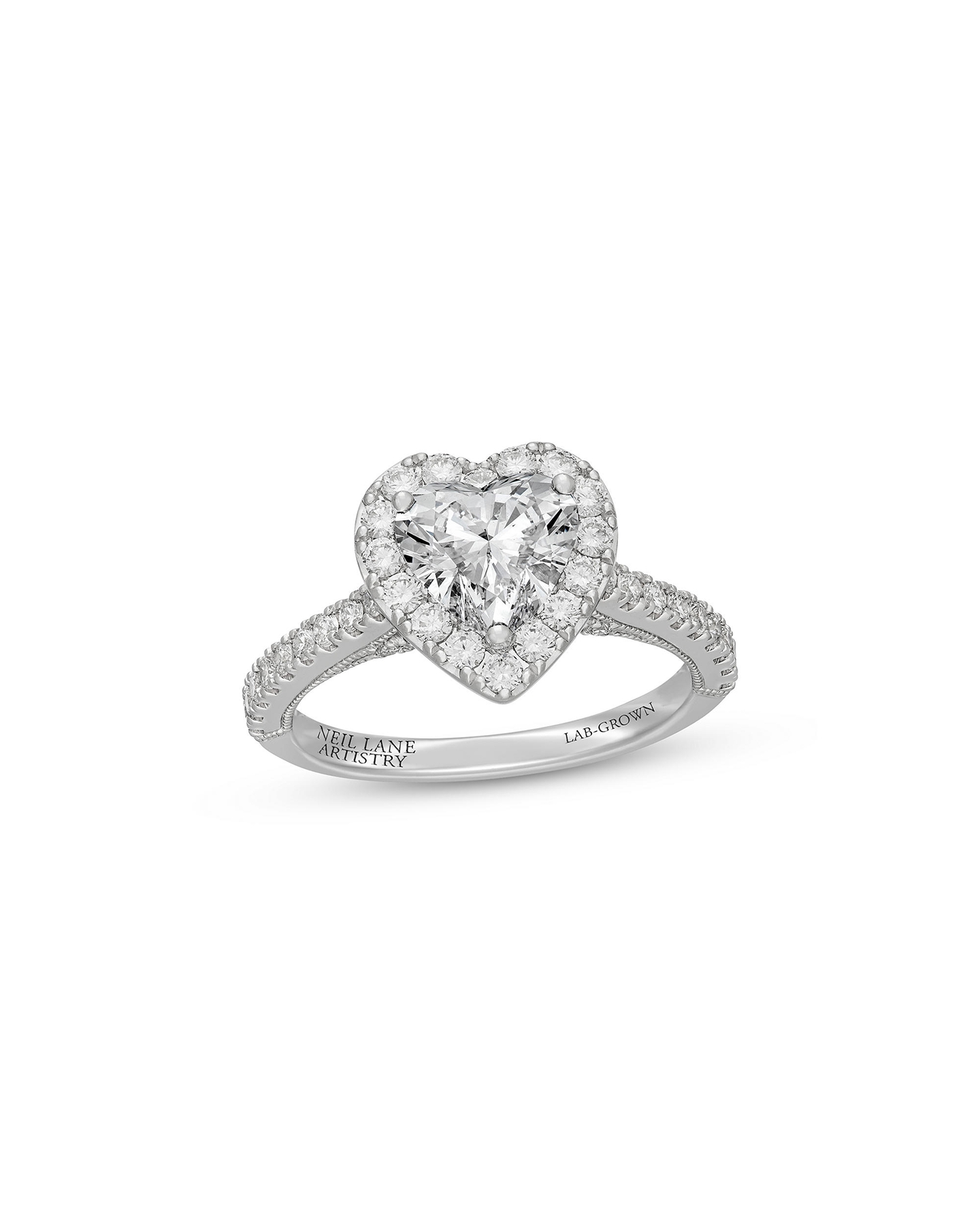
Although often seen as a modern, romantic choice, diamonds with a heart shape date back to the 16th century. Today, the heart-shaped diamond is a relatively rare diamond shape, making it a distinctive choice for an engagement ring that says “I love you” like no other.
The ideal heart-shaped diamond should be symmetrical, with a length-to-width proportion close to 1.00 for a balanced appearance. Proportions over 1.05 can look narrow or elongated, while those under 0.95 can appear overly wide. Because the shape is its defining feature, a diamond of at least 0.50 carats is recommended to showcase the heart's outline clearly.
With its unmistakable silhouette, the heart-shaped diamond is a timeless symbol of love and an eye-catching alternative to more traditional cuts. While achieving its precise symmetry requires the expert craftsmanship of a diamond cutter, the heart-shaped diamond is typical less expensive than a round-cut diamond of a similar size and quality.
The ideal heart-shaped diamond should be symmetrical, with a length-to-width proportion close to 1.00 for a balanced appearance. Proportions over 1.05 can look narrow or elongated, while those under 0.95 can appear overly wide. Because the shape is its defining feature, a diamond of at least 0.50 carats is recommended to showcase the heart's outline clearly.
With its unmistakable silhouette, the heart-shaped diamond is a timeless symbol of love and an eye-catching alternative to more traditional cuts. While achieving its precise symmetry requires the expert craftsmanship of a diamond cutter, the heart-shaped diamond is typical less expensive than a round-cut diamond of a similar size and quality.
Pear-Shaped Diamonds
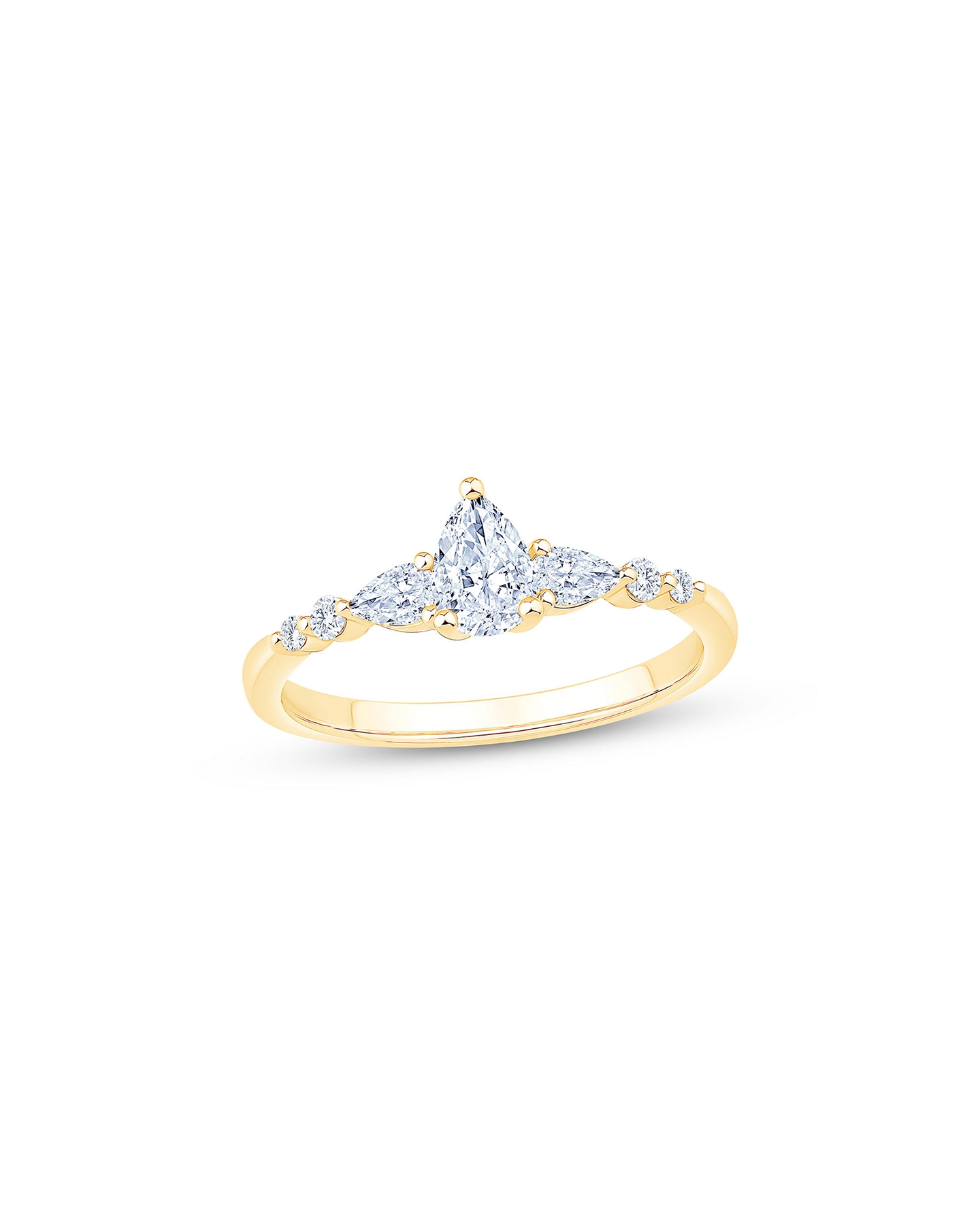
The pear-shaped diamond, or teardrop diamond, has been admired since the 1400s for its elegant silhouette and exceptional brilliance. Its popularity soared in 1969 when a Hollywood icon was given a 69-carat pear-shaped diamond. Today, the pear-shaped diamond is still an alluring engagement ring choice.
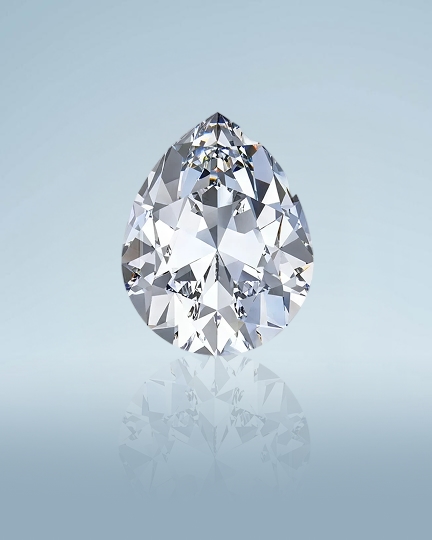
This distinctive shape combines the rounded curves of a round-cut diamond and the pointed tip of a marquise-cut diamond to create a soft yet striking, romantic yet statement-making shape. Pear-shaped diamonds typically have 58 facets and offer excellent brilliance and shine. For the most balanced look, choose a pear-shaped diamond with a symmetrical outline and a length-to-width proportion between 1.50 and 1.75. Proportions below 1.50 can appear too short, while those above 1.75 may look overly elongated.
Whether you prefer a classic or trendy engagement ring, the pear-shaped diamond works well in a variety of ring settings. Its elongated shape can also create the illusion of longer, slimmer fingers and often appears larger than a round-cut diamond of the same carat weight thanks to its greater face-up surface area. Additionally, pear-shaped diamond is typically less expensive than a round-cut diamond, giving them maximum impact and value.
This distinctive shape combines the rounded curves of a round-cut diamond and the pointed tip of a marquise-cut diamond to create a soft yet striking, romantic yet statement-making shape. Pear-shaped diamonds typically have 58 facets and offer excellent brilliance and shine. For the most balanced look, choose a pear-shaped diamond with a symmetrical outline and a length-to-width proportion between 1.50 and 1.75. Proportions below 1.50 can appear too short, while those above 1.75 may look overly elongated.
Whether you prefer a classic or trendy engagement ring, the pear-shaped diamond works well in a variety of ring settings. Its elongated shape can also create the illusion of longer, slimmer fingers and often appears larger than a round-cut diamond of the same carat weight thanks to its greater face-up surface area. Additionally, pear-shaped diamond is typically less expensive than a round-cut diamond, giving them maximum impact and value.
Emerald-Cut Diamonds
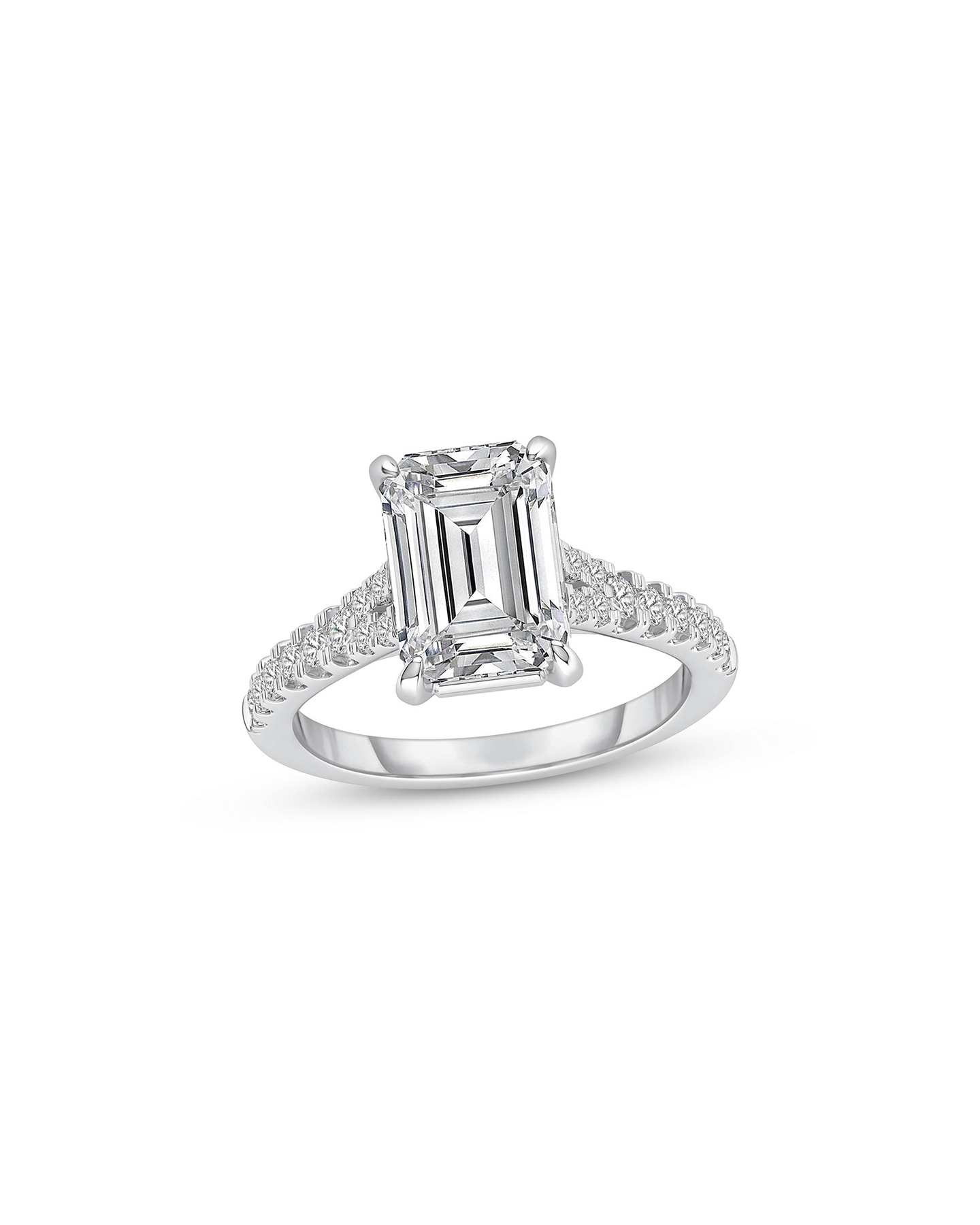
With a history spanning more than 500 years, the emerald-cut diamond is one of the oldest and most timeless diamond shapes. Originally developed for emerald gemstones to help prevent chipping, the cut gained widespread popularity during the Art Deco era for its clean lines, symmetry, and understated elegance. Today, it remains a favorite for vintage-inspired engagement rings.
The emerald-cut diamond is step cut, which means it has an elongated rectangular shape with cropped corners and step-cut facets that create a distinctive hall-of-mirrors effect. The classic length-to-width ratio of an emerald-cut diamond is around 1.50, though lower ratios create a squarer look while higher ratios produce a more elongated silhouette.
Rather than maximizing sparkle, the emerald-cut diamond’s step-like facets highlight the diamond's clarity with its sleek, glass-like appearance. Its elongated shape can also make fingers appear longer and slimmer while giving the diamond a larger face-up appearance than many other shapes of the same carat weight.
Emerald-cut diamonds typically have a lower price per carat than most other diamond shapes and often appear larger than their carat weight suggests, making them an excellent value. Because their open facets reveal inclusions more easily, choose a diamond with a higher clarity grade.
The emerald-cut diamond is step cut, which means it has an elongated rectangular shape with cropped corners and step-cut facets that create a distinctive hall-of-mirrors effect. The classic length-to-width ratio of an emerald-cut diamond is around 1.50, though lower ratios create a squarer look while higher ratios produce a more elongated silhouette.
Rather than maximizing sparkle, the emerald-cut diamond’s step-like facets highlight the diamond's clarity with its sleek, glass-like appearance. Its elongated shape can also make fingers appear longer and slimmer while giving the diamond a larger face-up appearance than many other shapes of the same carat weight.
Emerald-cut diamonds typically have a lower price per carat than most other diamond shapes and often appear larger than their carat weight suggests, making them an excellent value. Because their open facets reveal inclusions more easily, choose a diamond with a higher clarity grade.
Marquise-Cut Diamonds
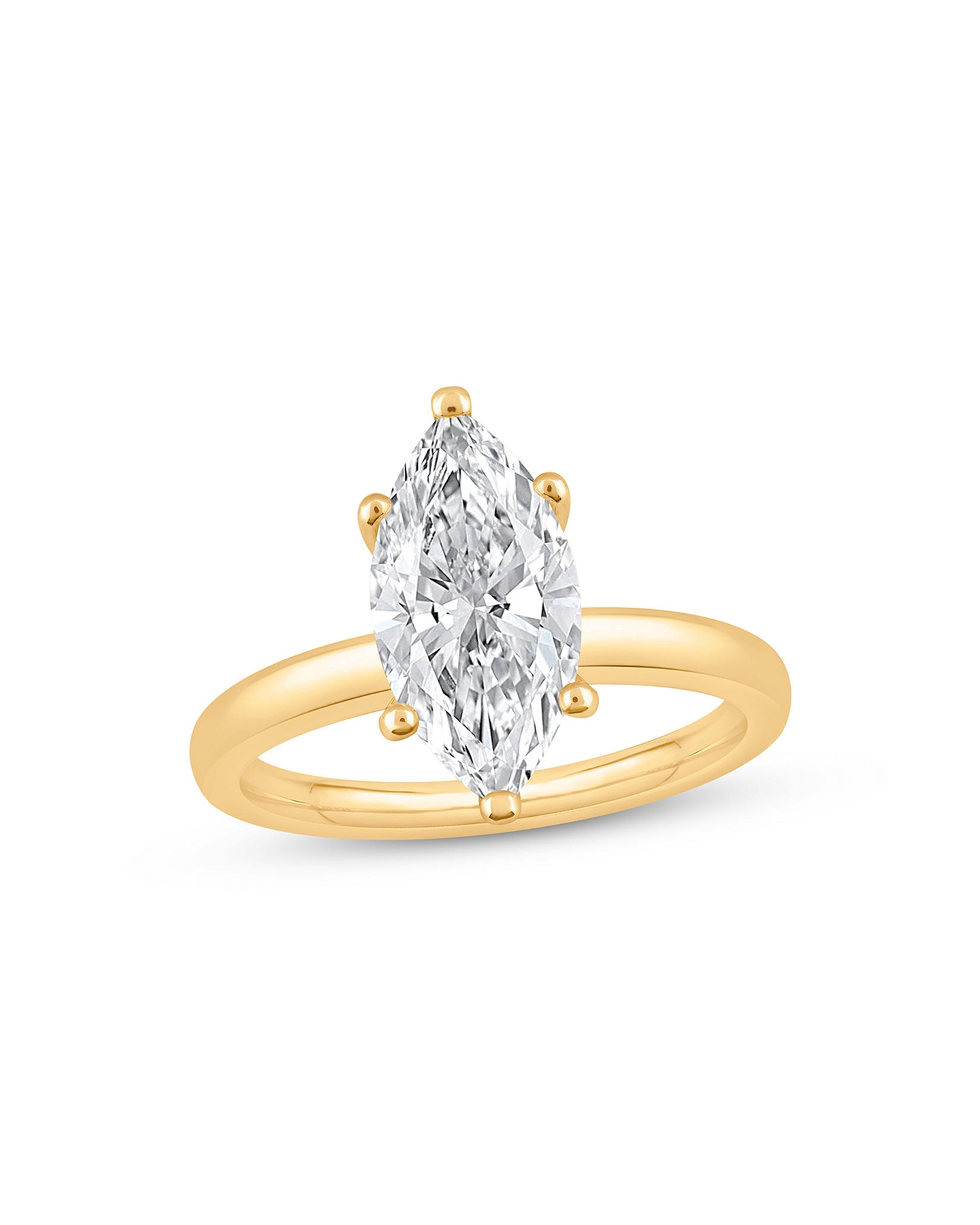
The marquise-cut diamond, also known as the eye-shaped cut, football-shaped cut, or "navette" (French for "little ship"), is a distinctive shape with a rich history dating back to the 18th century. Legend has it that a French king commissioned the cut to resemble the lips of his mistress.
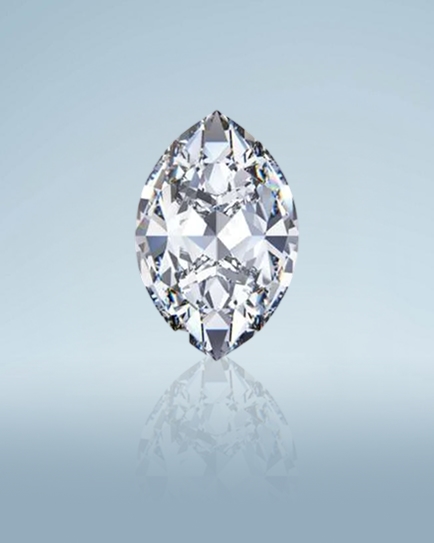
Defined by its elongated, football-like shape, curved sides, and pointed ends, the marquise-cut diamond typically has a length-to-width ratio between 1.75 and 2.15. Although a diamond’s proportions are a matter of personal preference, cuts under 1.75 can start to look stockier, while those over 2.15 can look narrow. Symmetry is essential for marquise-cut diamonds—the pointed tips should align perfectly, and both sides should mirror one another for maximum brilliance.
The marquise cut is ideal for those seeking a bold, statement-making look that will stand out compared to traditional round-cut diamond rings. Its elongated shape not only creates the illusion of a larger diamond but can also create the appearance of longer and slimmer fingers.
Compared to round-cut diamonds of the same carat weight and quality, marquise-cut diamonds are often offer impressive visual size and impact at a lower price point.
Defined by its elongated, football-like shape, curved sides, and pointed ends, the marquise-cut diamond typically has a length-to-width ratio between 1.75 and 2.15. Although a diamond’s proportions are a matter of personal preference, cuts under 1.75 can start to look stockier, while those over 2.15 can look narrow. Symmetry is essential for marquise-cut diamonds—the pointed tips should align perfectly, and both sides should mirror one another for maximum brilliance.
The marquise cut is ideal for those seeking a bold, statement-making look that will stand out compared to traditional round-cut diamond rings. Its elongated shape not only creates the illusion of a larger diamond but can also create the appearance of longer and slimmer fingers.
Compared to round-cut diamonds of the same carat weight and quality, marquise-cut diamonds are often offer impressive visual size and impact at a lower price point.
Diamond Shape FAQs
Placeholder
Placeholder
Placeholder
Placeholder
Shop Diamonds by Shape
Rings For Your Next Chapter
Learn More About Diamond Shapes | Kay