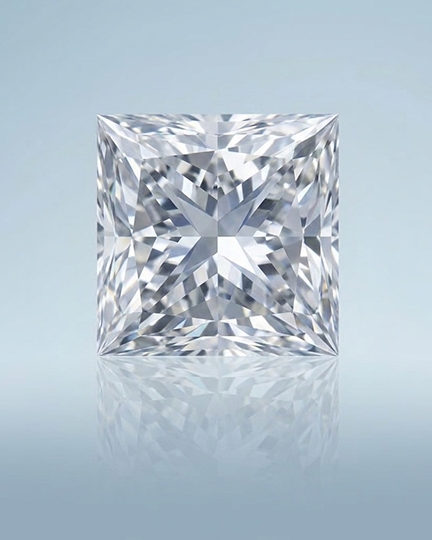
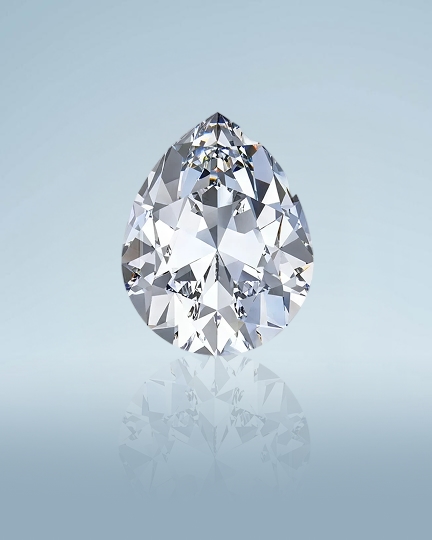
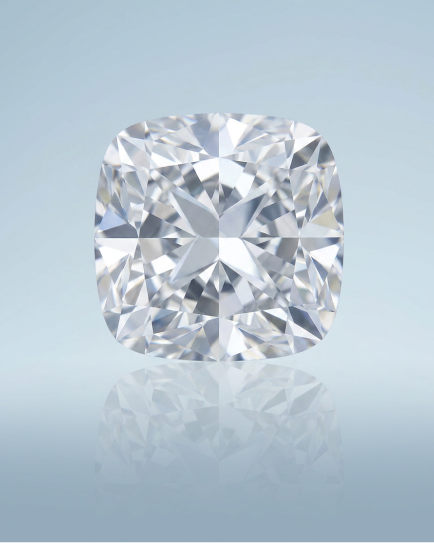
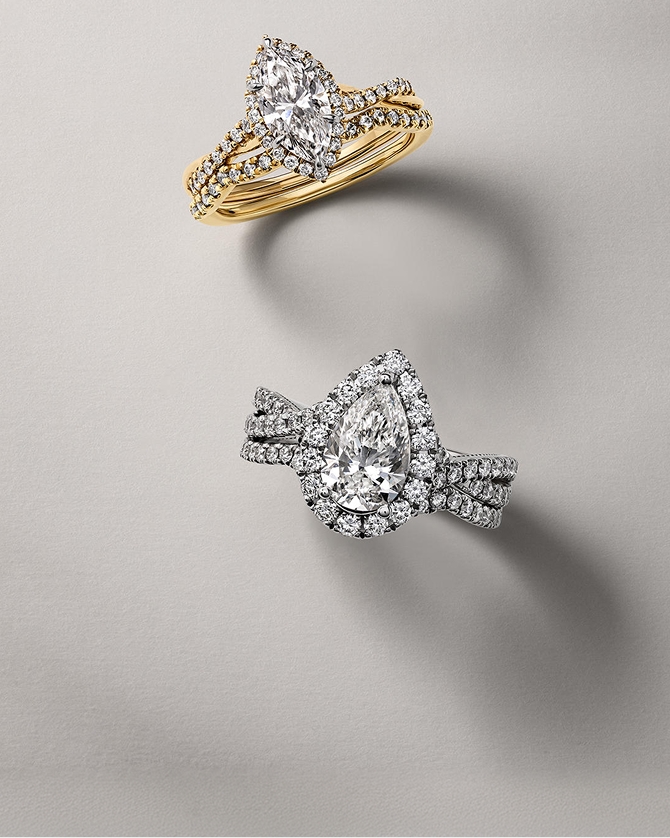
Of the 4 Cs of diamonds, cut has the greatest influence on a how a diamond reflects light, making it arguably the most important factor in choosing a diamond. A diamond’s cut refers to the balance of proportion, symmetry, and polish achieved by the diamond cutter. How well the diamond is cut directly correlates to the diamond’s overall beauty. A well-cut diamond allows light to enter, reflect, and return to the eye. Modern diamond cutters use carefully calculated angles and proportions to maximize the way light moves through diamond crystals and showcase each diamond’s brilliance in its best light. When grading a diamond, gemological laboratories evaluate the diamond for its brilliance, fire, and scintillation.
- Brilliance, or brightness, is the white light that is reflected back to one’s eye from the diamond.
- Fire, or dispersion, is the rainbow of colors reflected back to one’s eye from the diamond.
- Scintillation, or sparkle, is the play of light seen when the diamond is in motion. This is demonstrated by sparkling on the diamond’s surface.
When considering the cut of a diamond, it helps to be familiar with its characteristics. Here is an overview of the anatomy of a diamond and the measurements that play a key role in determining its cut.
-The table is the flat surface at the top of a diamond.
-The crown is the top portion of the diamond, from the girdle to the table.
-The girdle is the narrow rim around the widest part of the diamond, separating the crown from the pavilion. This is also referred to as the setting edge, where a diamond is held when set in jewelry.
-The pavilion is the lower portion of the diamond, from the girdle to the culet.
-The culet is the facet or point at the bottom of a diamond’s pavilion.
-A diamond’s depth refers to the height of the stone, from the culet to the table.